


Scoliosis & Movement: Rethinking Alignment, Strength, and Flexibility

Most conversations about scoliosis still revolve around straightening, stabilizing, or “correcting” the spine. But for many people, what’s actually needed is a more spacious way of thinking about alignment and strength—one that honors how the body naturally organizes itself around a curved spine. Movement becomes less about chasing symmetry and more about learning how your spine can feel supported, responsive, and comfortable.

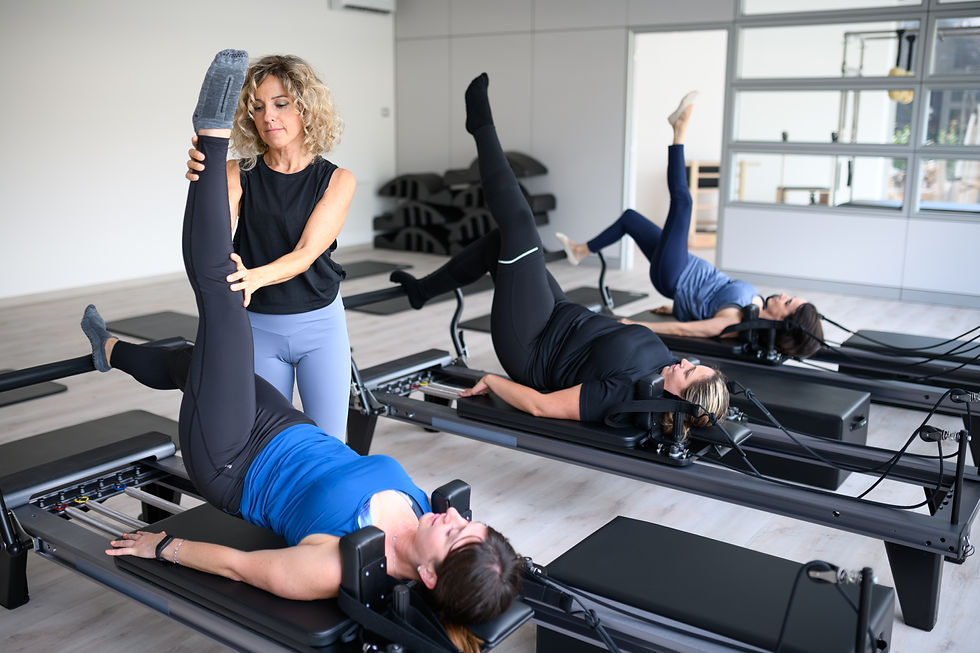
This is where Scolio-Pilates® comes in. It’s not traditional Pilates with a few tweaks; it’s a scoliosis-specific framework that helps you understand your curve pattern, organize your body with clearer intention, and move in ways that reduce effort instead of increasing it. We use Scolio-Wedges and props, breath, and targeted corrections not to “fix” anything, but to give your body a clearer map—one that makes everyday movement feel more doable.
Current research on scoliosis and movement echoes this shift. Studies consistently show that people with scoliosis do better when they’re encouraged to move—not cautiously, but confidently and regularly. Benefits often show up in decreased pain, improved function, easier breathing, and a stronger sense of body trust. The key isn’t perfection; it’s consistent, individualized practice that builds awareness and adaptability.
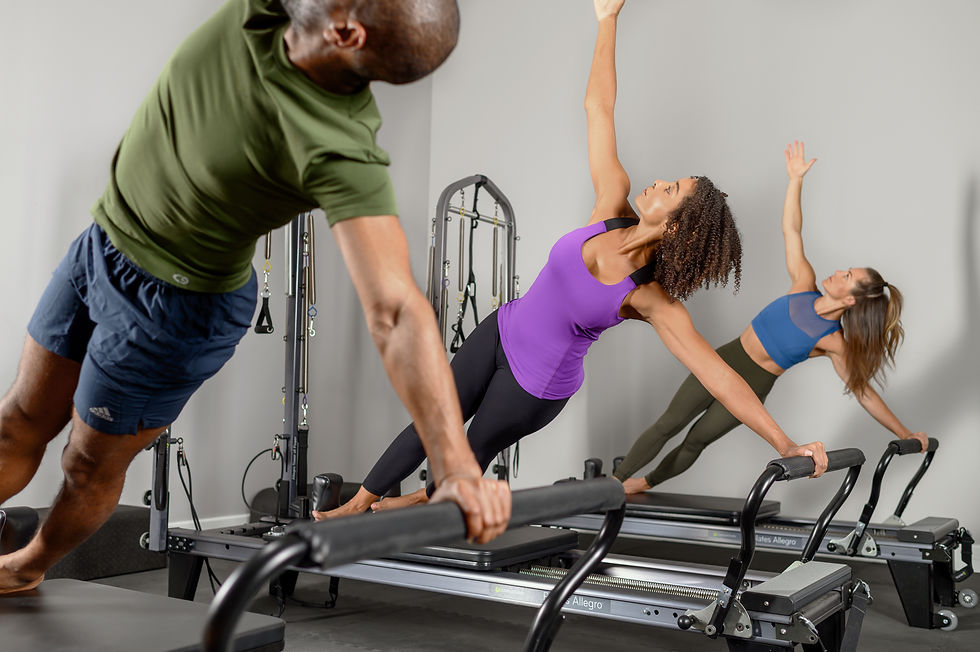
In Scolio-Pilates® sessions, we explore what that looks like in real time. Sometimes stability comes from learning how to yield—letting the body find support before it asks for strength. Sometimes flexibility shows up when we stop trying to stretch or force our curves and start respecting them. And sometimes “alignment” is less a position we're trying to attain and more a sensation of ease that lets the whole body participate.
Living well with scoliosis doesn’t require forcing your body into someone else’s idea of straightness. It asks for movement that feels intelligent, curious, and genuinely supportive. When we work thoughtfully with the amazing spine you already have, we can discover options for comfort and confidence that you may not have realized were possible.
And in that process, you start to uncover where movement really lives in your body—not in perfection, but in possibility.

One practical point is that the idea of working with the body rather than forcing it into a predetermined position also applies to how progression is handled in other areas of learning. Consistency often matters more than choosing the most advanced option immediately, particularly when the goal is to build skills that can be applied confidently in real situations. The same principle can be useful when developing professional knowledge, where contracts advance should be approached according to the level of responsibility, experience, and practical understanding required rather than simply pursuing a higher-level qualification. In both movement and professional development, progress tends to be more sustainable when the approach is adapted to the individual rather than based on a fixed idea of…
One useful point here is that movement education can benefit from the same principle of gradual progression described in professional learning: the goal is not always to pursue the most advanced option, but to choose something that matches the individual’s current needs and can be applied consistently. For people working with scoliosis, understanding how strength, flexibility, breathing, and body awareness interact may be more valuable than simply trying to achieve a particular posture or appearance. That idea also applies when developing knowledge in a professional field, where choosing between a diploma or certificate should depend on the level of knowledge required, previous experience, and the intended outcome rather than the title alone. In both cases, progression tends to be more meaningful…